
The Transfiguration
A few damn serious words from a Romantic for Romantics

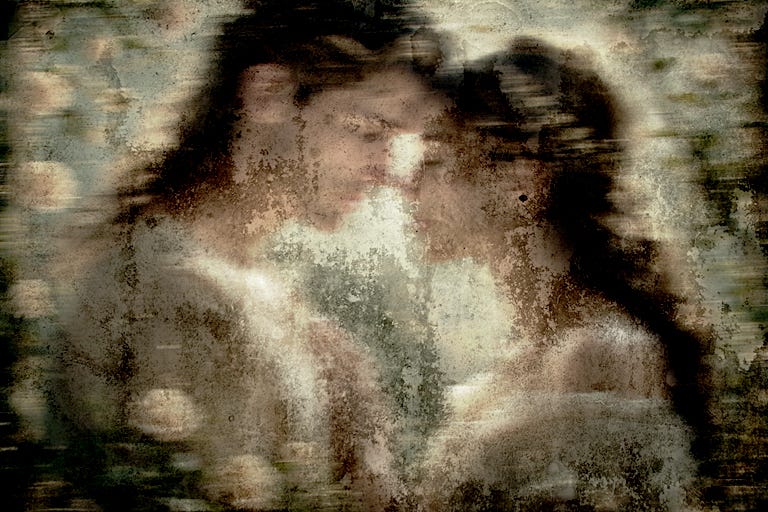
In trying to explain the phenomena of life and make them more bearable, our ancestors invented Romanticism. At first it was nothing more than a period of time, and I doubt that the writers, artists, and poets of that era had any idea what they were passing on to future generations. Who has not grown up with fairy tales and heroic songs in which brave knights won fair princesses by slaying dragons? And whoever was shaped by fairy tales certainly found a continuation of that in adulthood in Romantic poems or novels. Without recognizing at first glance what one was actually dealing with. Superficially it looked as if our ancestors were able to love more deeply. Or more beautifully. Romantic, in short. That was when women were still worshipped and men still had honor.
A different picture emerges when you look more closely at the life stories of great Romantic poets and writers. It often turns out that poetry or storytelling was their escape route into better worlds. Because the reality of those earlier times, including the so-called Romantic times, was anything but romantic. The dictates of the church were there, family structures dominated, and some loves were made impossible. Parents made sure that not romantic considerations but practical ones came first. Back then a wealthy family meant security. That was decisive, not whether someone could rhyme pretty verses. That is why most Romantic poems and stories deal with unfulfilled love. Even if this is not obvious at first or second glance. They speak of an ideal world where lovers find happiness and all dreams come true with the superpower of yearning. Shakespeare probably saw things more realistically. With his story of the tragically doomed love of Romeo and Juliet he anticipated Romanticism by roughly 180 years. The idea that lovers can only be united in death is essentially the Romantic perspective itself. Because in real life there was room for romance only in dreamlike escapism.
Romantic ways of seeing, above all yearning, have lasted to this day. There are some new offshoots of Romanticism, including the Gothic movement, but above all Romantic ideas have long since become deeply embedded in the collective unconscious. Very few bipeds are ever likely to discover why they love, or want to love, the way they do. What their patterns of desire are, and how or by what they were shaped. What the idea of love itself really amounts to. At best bipeds are confronted with their illusions when their Romantic ideas of life are destroyed. Though they rarely track down the real reasons, preferring to find culprits. In the evil partner, or in their own failings.
Ironically, the love stories that seem to work best are often those furthest removed from love and built purely on rational, practical considerations. On a bargain: sex, fertility, and children in exchange for security. Once the children arrive they become, whether they want to or not, the glue that holds love together. And of course stories were invented about that as well, which transfigured this very banal fact into something romantic. The truth is as banal and unromantic as it can possibly get: nature tricks bipeds into sex, and once the children are there, that is the end of romance. Then the family game begins, and no matter how much one tries to transfigure it, it is nothing more than the symbol of life striving to preserve itself. Which is what practically every form of life on earth does, regardless of size or intelligence, regardless of how.
From this very unromantic perspective it becomes clearer why most love stories are doomed to fail. Simply because the true reasons that set off the impulse to love in the first place are not romantic but purely practical. Nature did not create attraction as a gift for bipeds. It does not help to drag in Indian goddesses and gods and talk about Tantra. The sex drive was not given to living beings so they could soar through the universe, no matter how much I might want to see it that way. The power behind the sexual drive had to be so immense and overwhelming that it could overcome obstacles otherwise insurmountable, namely the incompatibility of woman and man. No matter how much woman and man may inspire each other, no matter how much they may love or want to love, a gulf separates them that makes the Grand Canyon look like a small crack.
Keep reading with a 7-day free trial
Subscribe to Vigor Calma's Word Lottery to keep reading this post and get 7 days of free access to the full post archives.